
Engineering Steel for Manufacturability: Where Better Projects Begin
 In industrial and manufacturing projects, most delays, cost overruns, and production issues don’t begin on the shop floor. They start earlier – when design decisions are made without full consideration of how something will actually be built.
Too often, engineering, fabrication, and delivery are treated as separate phases, handed off from one team to the next. Designs may meet functional requirements, but overlook fabrication realities like material efficiency, labor complexity, or connection details. The result is rework, wasted material, longer lead times, and added cost.
The most successful projects are the ones where design, fabrication, and delivery are considered together – not handed off from one phase to the next.
An engineering-first approach makes that possible.
When engineering and fabrication are aligned from the start, projects move faster, cost less, and perform better. At Oertel Metal Works, the goal is simple: deliver work that’s done the right way, on time, the first time. Achieving that consistently starts long before fabrication begins. It starts with smart, coordinated engineering that’s informed by how steel will actually be built and delivered.
As President Brian Krzyaniak explains,
“When engineering, fabrication, and delivery are aligned from the beginning, it sets the entire project up for success. Bringing those disciplines together early and taking a design for manufacturability approach is how we reduce risk, control costs, and deliver better outcomes for our customers.”
Designing steel for manufacturability
Smart engineering isn’t just about producing drawings – it’s about designing steel with manufacturability in mind. When design decisions account for how parts will actually be fabricated, assembled, and used, customers see meaningful benefits:
- Fewer revisions and change orders
- Reduced labor and material costs
- Less scrap and rework
- Improved fit, function, and durability
- Shorter timelines from concept to completion
Industry benchmarks often estimate 5–30% cost savings when designs are optimized early – savings that compound across production runs and long-term operations.
That philosophy is embedded in Oertel’s day-to-day engineering work. As Hank Penicnak, Engineering Development Manager, notes,
“The most efficient steel projects are the ones designed with fabrication in mind from the very beginning. When engineering and fabrication work together early, you avoid rework, reduce cost, and keep projects moving.”
Where early engineering creates the most value
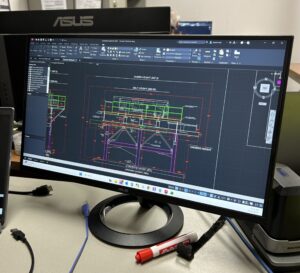
Oertel’s in-house engineering and design team works directly alongside fabrication, allowing ideas to move seamlessly from concept to production. Using tools such as AutoCAD, Inventor, Autodesk FEA tools, and RISA 3D, the team evaluates designs not just for strength and compliance, but for efficiency and buildability.
That collaboration helps identify opportunities to:
- Adjust material thickness or specifications without compromising performance
- Simplify connection details to reduce labor hours
- Minimize scrap through smarter material utilization
- Focus effort on features that truly impact form, fit, and function
In many cases, the biggest gains don’t come from dramatic redesigns. They come from small, informed changes made early – when they’re easiest and least expensive to implement.
One partner, fewer handoffs
For manufacturers and industrial operators, the value of an integrated, engineering-first approach is simplicity. Fewer handoffs mean faster answers, earlier decisions, and fewer downstream surprises – especially on complex steel projects.
This approach is especially relevant in the Quad Cities, where manufacturing and heavy industry remain critical to the regional economy.
When engineering and fabrication work together early, projects move faster and perform better. It’s a smarter way to build steel – and a stronger foundation for long-term success.